
Stacker, Ship Loader, Eco Hopper, Reclaimer, Truck Unloader, Belt Conveyor Manufacturer
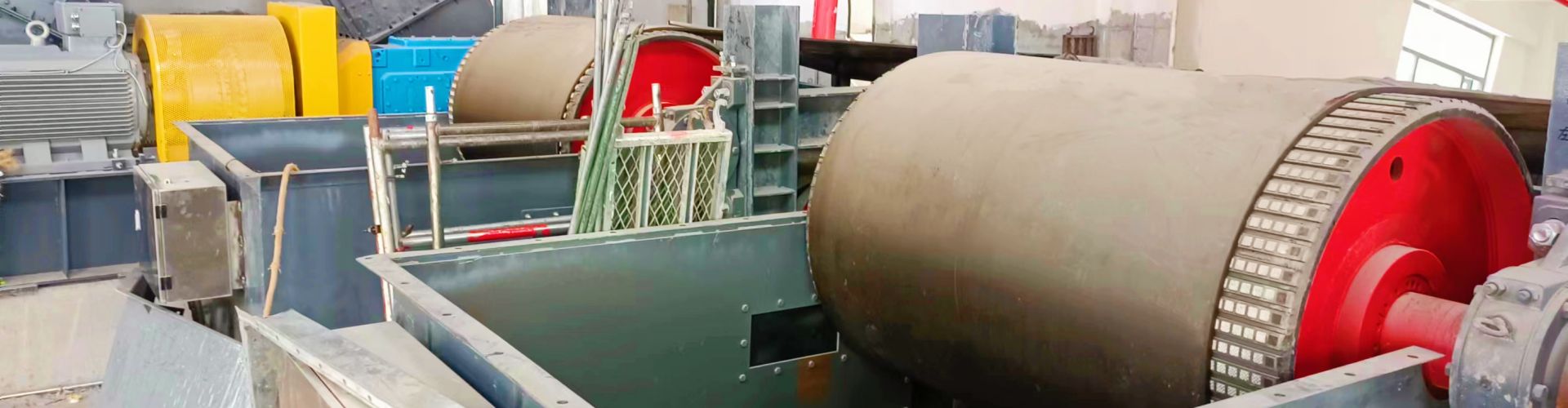

Belt Conveyor Pulleys are one of the most versatile components of a conveyor system. As conveyor pulley manufacturer in China, SKE Industries offers a wide range of conveyor pulleys designed for bulk material handling belt conveyors. Our portfolio includes drive pulleys, tail pulleys, wing pulleys, and bend pulleys, engineered for durability and efficiency in industries like mining, quarry, ports, power, steel and more.

The head pulley is located at the discharge point. It usually drives the belt and often has a larger diameter than other pulleys. If the conveyor adopts a mid-drive design, the head pulley does not have a driving role.
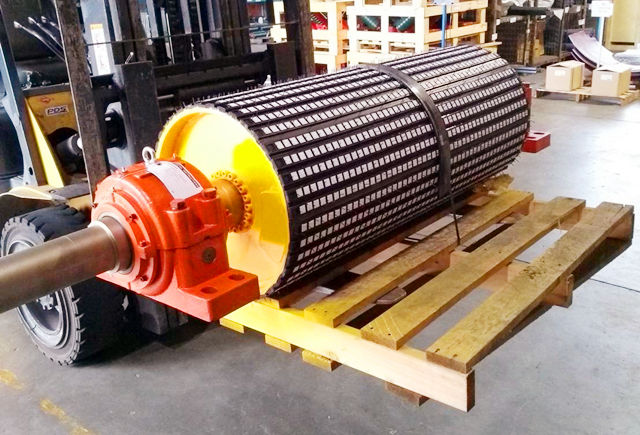
A Drive Pulley is used for the purpose of driving a conveyor belt. They are normally mounted in external bearings and driven by a motor and gearbox. A drive drum pulley has rubber or ceramic lagged.

Belt Conveyor Motorized Pulley is a type of belt conveyor driving units. This drum motor needs smaller space for driving belt conveyor systems. The usage frequency of drum motors in projects is constantly increasing.
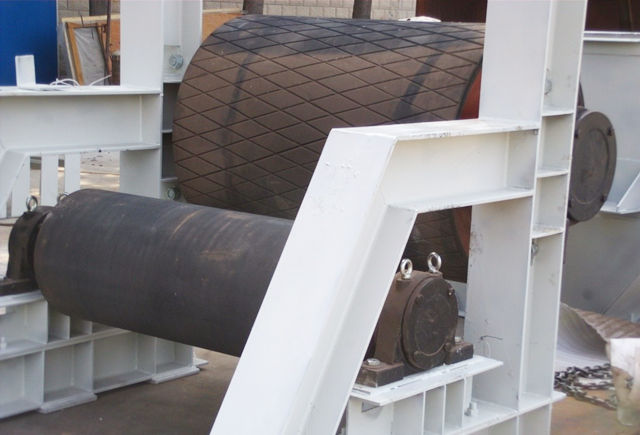
A snub pulley improves the traction of the drive pulley by increasing its belt wrap angle. The diameter of the snub pulley is much smaller than head pulley. We offer lagged conveyor snub pulleys.
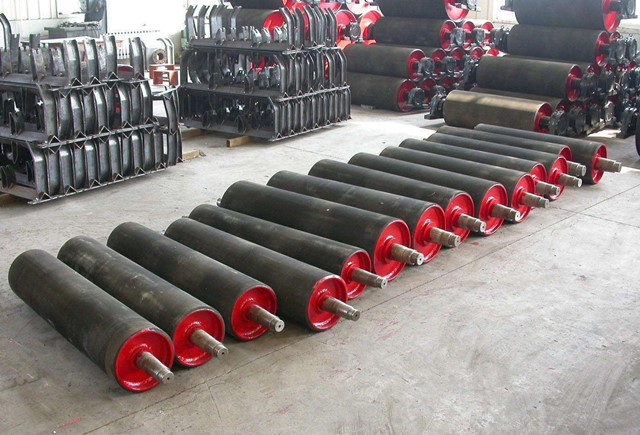
The Belt Conveyor Bend Pulley is frequently used as tail pulley, take-up pulley, and snub pulley to change the belt running direction. It plays an important role in a conveyor belt.
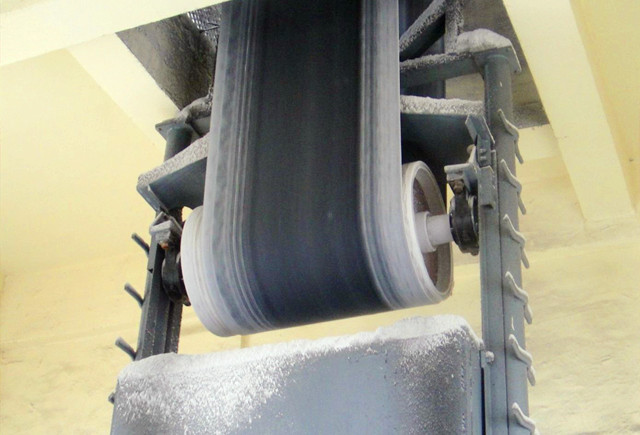
A take-up pulley is used to provide the belt with the proper amount of conveyor belt tension. It is often used in belt conveyor gravity tension system and screw tension system. Its position is adjustable.
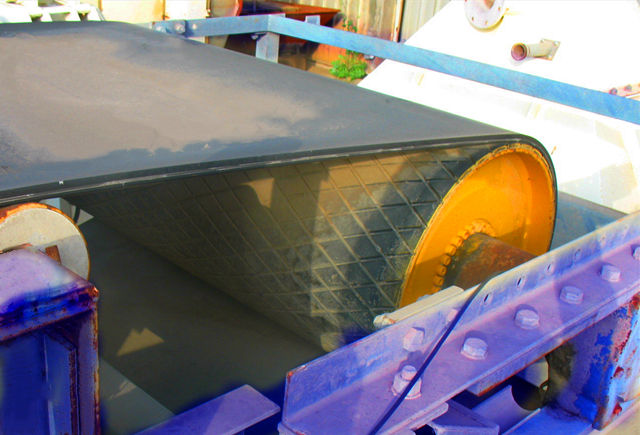
The conveyor tail pulley is located at the loading end of the belt. It comes with either a flat face or a slatted profile (wing pulley). Tail pulleys are used to redirect a conveyor belt back toward the drive pulley.
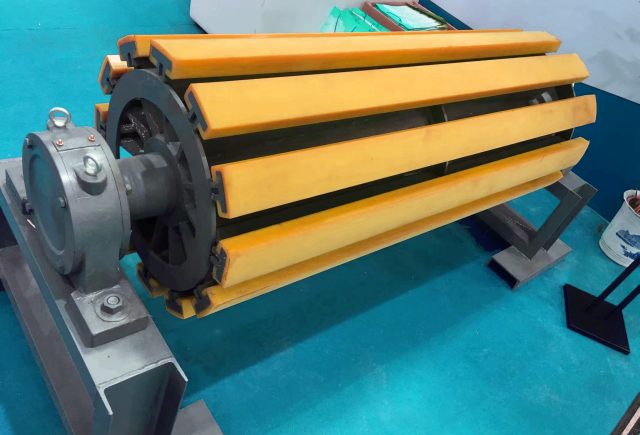
The wing pulley is also known as self-cleaning pulleys, and wing pulleys are primarily used on the tail end of bulk handling systems. We provide mine duty and quarry duty wing pulleys.
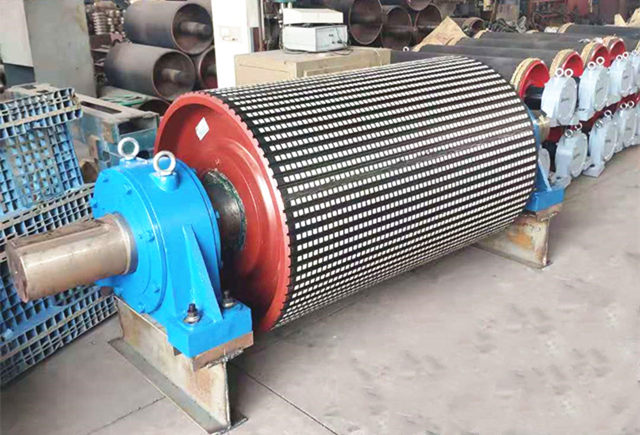
The lagged pulley can be head pulley, tail pulley, take-up pulley, bend pulley, etc. We offer ceramic lagged pulley, plain rubber lagged pulley, diamond grooved lagged pulley, spiral grooved lagged pulley, etc.


Our drum pulleys are made of steel to create a durable shell and are normally crowned to facilitate greater belt contact. Wing pulleys are fabricated with a non-continuous contact surface and open voids that allow loose material to fall. There are five classes available:
A pulley bushing is a component used in conveyor pulley systems to connect the pulley to the shaft. The bushing serves as an intermediary between the pulley and the shaft, providing a secure and often adjustable connection. The bushing types:
The pulley hub is a central component of a conveyor pulley, serving as a connection point between the pulley shell and the shaft. It plays a crucial role in transmitting the rotational force from the shaft to the pulley shell, enabling the movement of the conveyor belt.
Pulley lagging is a protective layer applied to the surface of a conveyor pulley to improve traction between the pulley and the conveyor belt. We offer conveyor pulleys coated with materials like SBR, SOF, SAR, MSHA, Neoprene, Urethane, Husky, Static Conductive Neoprene, or Cold Bond Rubber Lagging .
| Chevron-Compound | Herringbone-Compound |
|
|
| Smooth-Compound | Holz Slide Lag-Compound |
|
|
| Ceramic-Compound | Urethane-Compound |
|
|
Our conveyor pulleys are engineered to handle high belt tensions and continuous operation. Robust shell construction and reinforced shafts ensure reliable performance in long-distance and high-capacity conveyor systems.
We use high-quality steel, precision machining, and controlled welding processes to ensure dimensional accuracy, structural strength, and long service life under demanding operating conditions.
Each pulley is dynamically balanced to minimize vibration and uneven loading. This improves belt tracking, reduces wear on bearings and structures, and ensures smooth, stable operation.
We offer hot-vulcanized rubber lagging and other lagging options to improve friction, reduce belt slippage, and protect pulley shells, even in wet, dusty, or abrasive environments.
Our belt conveyor pulleys have been widely used in mining, port, quarry, and bulk handling projects, where reliability and durability are critical to system uptime.
While following international standards, we provide customized pulley diameters, face widths, shaft designs, and lagging types to meet specific conveyor layouts and operating requirements.
From material inspection to welding, machining, lagging, and final inspection, each pulley undergoes strict quality control to ensure consistent performance and dependable delivery.